


How to Stake a New Tree in Ballarat (And When to Take the Stakes Off)

Ballarat can be pretty windy in Spring, and I know this comes as no surprise to many of you. This is the time when any newly planted tree really gets tested. Because a newly planted tree is relying on the soft ground and it’s undeveloped roots to hold it in place, add a bit of wind to the mix and disaster is likely. Getting the planting right from the start, then staking properly, gives the tree the support it needs until the roots catch up.

Getting the hole right before you plant
How you dig the hole matters just as much as how deep you go. Don't use an auger. It leaves a smooth, hard crust around the edge of the hole that roots struggle to push through. Instead of growing outward the way they should, the roots hit that wall and start circling back on themselves. The tree can end up rootbound even though it's sitting in open ground.
A spade or shovel gives you rough, broken edges that roots can actually get into. If you're doing a lot of holes and reaching for machinery, at least rough up the sides afterwards with a shovel so you're not left with that sealed crust.

Before you plant, take a look at the roots themselves. Prune off any that are circling or tangled, and loosen the rest so they're sitting free rather than wound up tight. A tree planted with roots still curled in on themselves is fighting an uphill battle from day one.
Make the hole two to three times wider than the root ball, but only as deep as the root ball itself. Width matters here more than depth.
Trees establish best when the roots can spread out horizontally first, before heading down. That wider spread gives the roots more soil to work with early on, which means better access to water and nutrients while the tree is still settling in.

Planting depth
Find the root flare, the point where the trunk widens out into the roots. This should sit level with the surrounding ground, or just slightly above it, once the tree is in.
If you're planting a grafted tree, keep the graft union above the hole and clear of the soil line. Worth remembering too that the whole root ball tends to settle down slightly once you've watered it in, so plant a touch higher than you think you need to rather than risk it sinking below grade.
Backfill with a mix of the original soil and some compost or soil conditioner. Press down gently to remove air pockets, don't compact it hard. Water thoroughly straight away so everything settles properly.
Get this part right and the roots have exactly what they need to grow out and anchor the tree. That's when staking starts earning its keep

The bamboo stake already on your tree
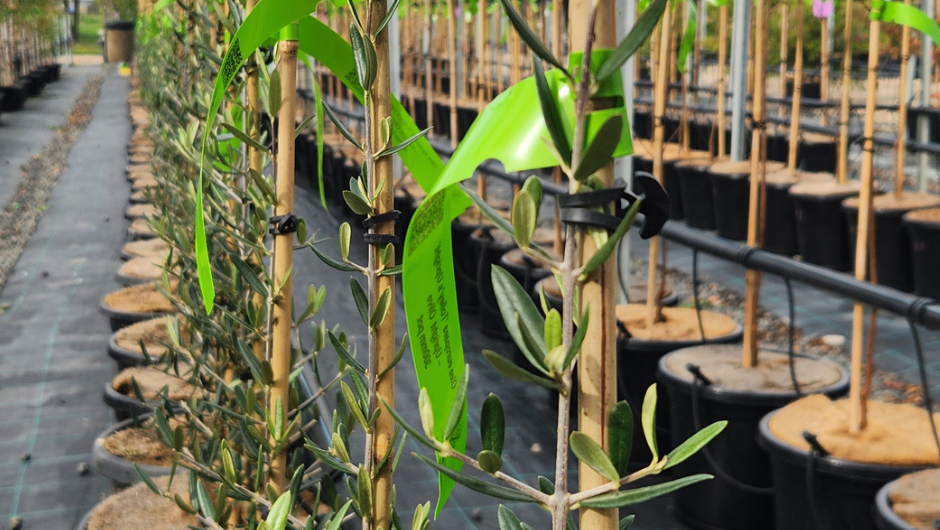
Every advanced tree that leaves our nursery comes with a bamboo stake attached to the trunk with rubbers.
Please please please, leave the stake and rubbers on the plant. As the tree grows the rubbers expand with it. The bamboo stake supports the trunk directly, and once you add the outside hardwood stakes (which we will talk about) it will help to spread the force between the two when the wind picks up.
Setting up the outside stakes
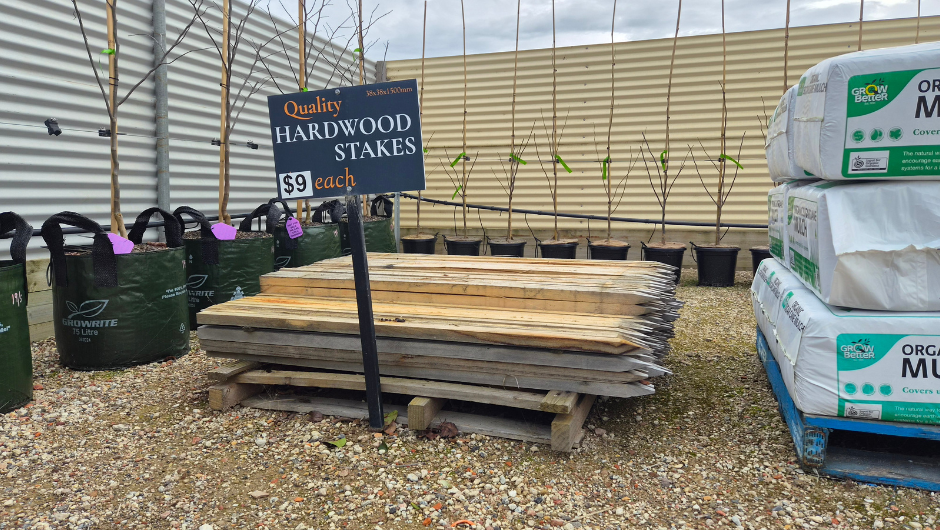
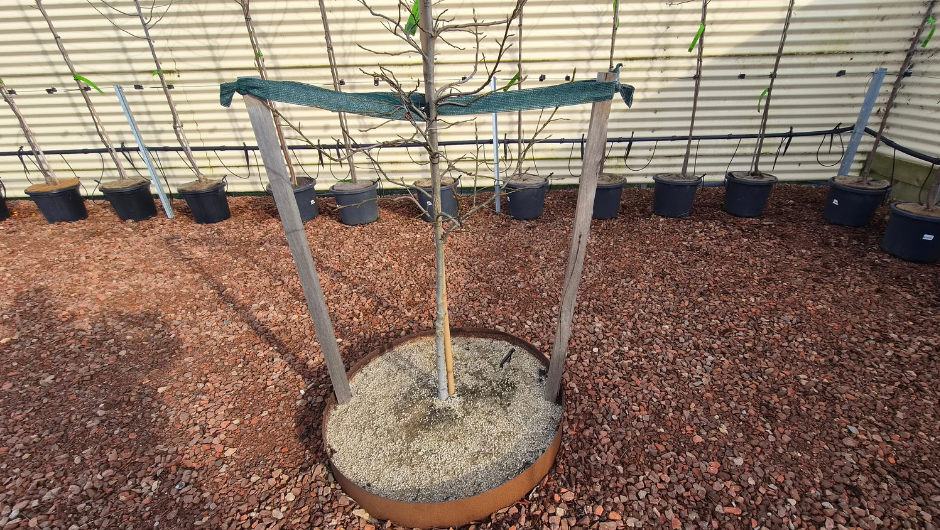
Once your tree is planted, use two or three hardwood stakes at 1.5 metres long. Position them outside the rootball so you don't damage the roots you've just settled.
Drive each stake 600mm into the ground for a solid hold. We have hardwood stakes available here at the nursery so you can grab supplies when you collect your trees.
Tying it together
My preferred method of staking is to secure the trunk and the bamboo stake to the outside stakes with jute tree tie. I use a figure-8 pattern between stake and trunk which stops direct rubbing and allows the slight movement that helps the roots anchor properly.
A little tip I’ve found super helpful is ff you pop a screw through the tie into the stake it stops the jute from sliding down over time. Which is great because it’s one less things to worry about.
Signs a stake or tie needs attention
Check your stakes and ties regularly to make sure they're doing the job properly. A stake that's started leaning usually means it's worked loose in the ground and won't be offering much support.
A tie that's gone slack isn't going to do much on a windy day either. If your ties are too tight you'll notice rub marks or grooves starting to form in the bark. These are quick fixes, best dealt with as soon as you spot them.
As the trunk thickens you'll also need to loosen the ties off so they don't cut in. It only takes a minute, and it protects the tree for years.

When to take the stakes off
Most trees are ready to stand unaided after 12 to 24 months, once the root system is properly established. Trees in exposed or particularly windy spots may need the support for longer.
Still unsure how your new trees should be staked? Come and talk to us. Book a nursery appointment at ballaratnursery.com and we'll show you exactly how to stake and tie a tree properly.
We stock everything you need and can walk you through it in person, so you can go home and stake with confidence.


Comments